Showing posts with label LCF. Show all posts

Monday, June 20, 2011

LCF BA Graduate Showcase...Sungkyun Yuk

LCF_BA_SungkyunYuk_Feature Button

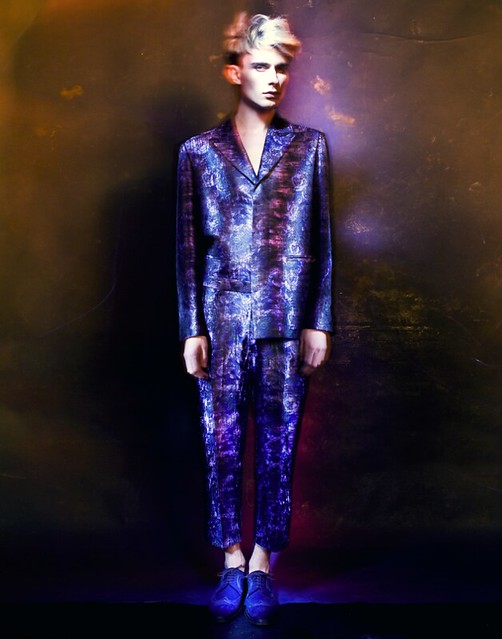
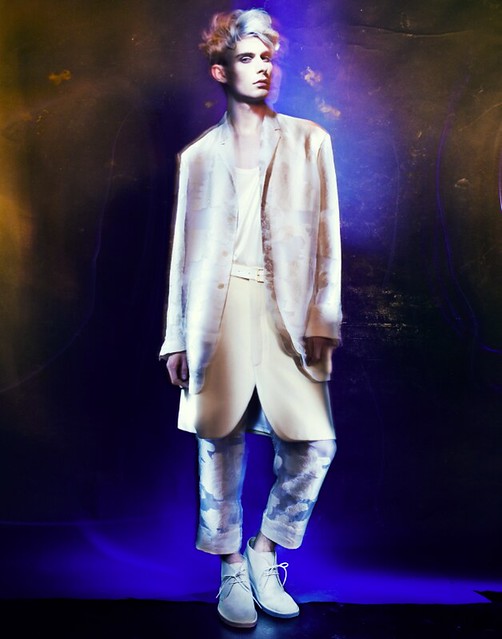
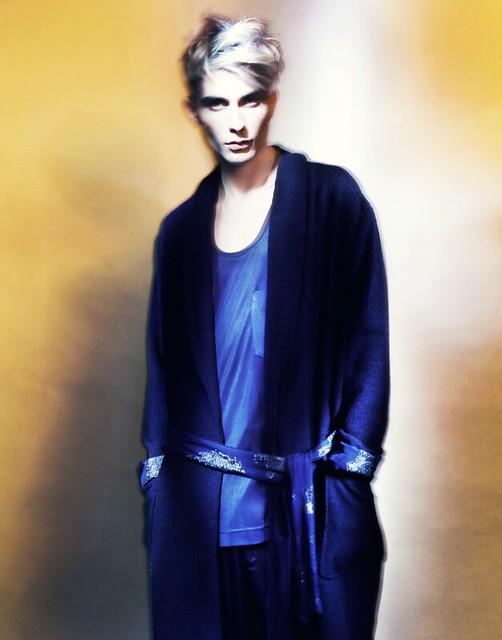
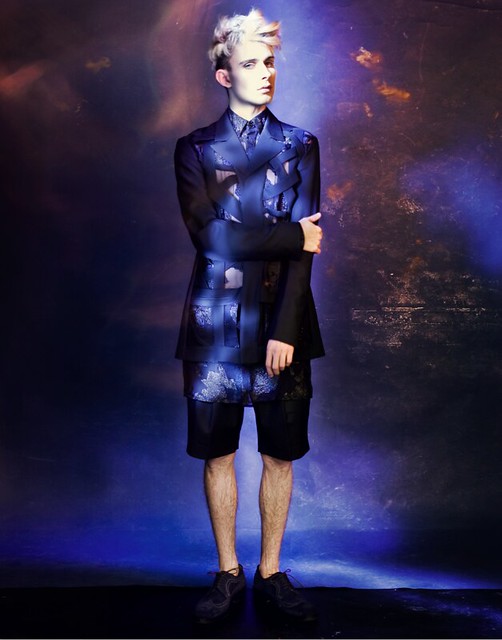
Despite missing out on watching this year's crop of talented LCF BA graduates showcase their collections on the catwalk, I'm keen not to overlook them. Thanks to the backstage images we've already featured and for the students informative Showtime pages, my appetite to learn more about this exciting bunch has certainly been whet. As ever, the menswear is a real highlight. In recent years we've been introduced to the likes of Baartmans & Siegel and Asger Juel Larsen and I'm certain that there are a few similar stars in the making here. Sungkyun Yuk could well be one.

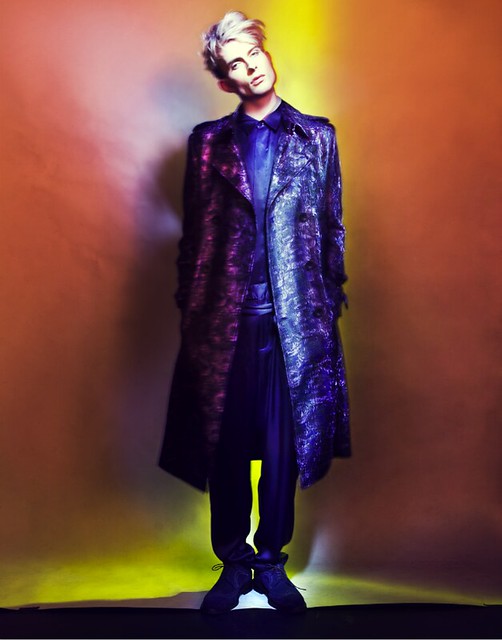
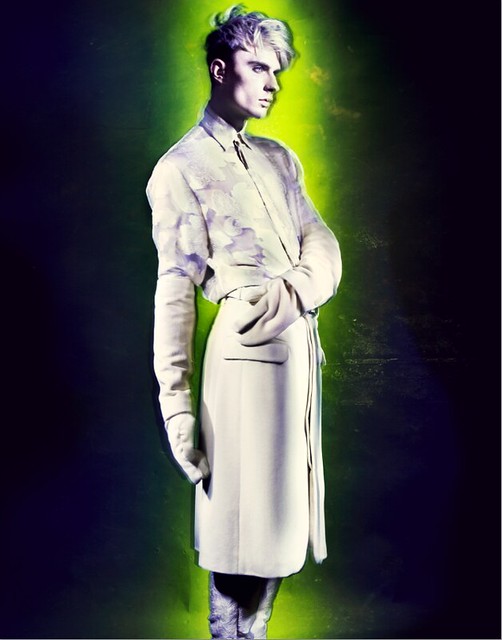
Entitled 'Arise, shine, for your light has come' Yuk's final collection documents the process of design development and transition of various staples of formal menswear. Inspired by an insects metamorphosis this is a collection that narrates its own story. With each design, more function and complexity are added in a measured way. With anatomical exploration at its core, Yuk offers a structural inquiry into the articulation of the human body, and its direct relationship with clothing. Influenced by Aitor Throup's approach to design, this young design talent is keen on creating garments that mirror the movement of the body. Before we take a look at the collection itself and speak with the graduate about their work, Yuk offers a glimpse inside of her sketchbook...

6 copy
15 copy
18 copy
19 copy
26 copy
34 copy
44 copy
The metamorphosis of a collection as documented by Sungkyun Yuk's sketchbook.

For menswear to constantly evolve, it needs designers like Sungkun Yuk who approach the design process in a different way. Designers who experiment. Who push textiles and techniques in new directions and challenge the typical and accepted way of how garments should be made. Here we talk with the designer to learn more about the collection and processes behind it...

SS: Congratulations on the show! How did it feel seeing your finished designs on the catwalk?
Sungkyun Yuk: I couldn't see well because I was backstage. However, I did see a selection of photos that my friends took. I'm very happy with my final collection anyhow.

SS: What attracted you to the LCF BA course in particular?
Sungkyun Yuk: During my Foundation course, my tutor at the time suggested that I apply to the LCF. She said that LCF is the best for menswear in the UK.
At the time, I did not mind where I went, I just wanted to study fashion at a good college.

SS: What was the Best thing about your course?
Sungkyun Yuk: Tom Adams, our head tutor, let me do whatever I wanted and was extremely supportive. He approved of my originality and allowed me to get on with it. Also, I met amazing friends whilst I studying.

SS: Describe the moment you realized you wanted to be a menswear designer?
Sungkyun Yuk: I never imagined that I want to be a fashion designer before I was twenty two years old. Prior to menswear design, I studied Bio-Technology but in the end I lost interest and needed a change.

I tried to look for something that I could enjoy eternally. The answer was "clothes". Ever since I was a child, I loved clothes and shopping. However, one day I realized that it is hard to find the clothes that I wanted to wear. The simple solution was to make the clothes I wanted. This made me study fashion.

SS: Entitled 'Arise, shine, for your light has come', the collection takes its inspiration from a bug's metamorphosis. What attracted you to this idea?
Sungkyun Yuk: For me, clothes are the second skin and an extension of the body. Fashion for human beings is the same as a shell, unique features and beautiful colours which can help distinguish us from others, from creatures such as bugs. In essence, garments protect body from external dangers and replenish people aesthetically. Furthermore, they provide people with the opportunity to express their individuality through styling.

The title of final collection is “Arise, shine, for your light has come,” is influenced by an insects metamorphosis. The larvae waits for a long time, it has the power to survive in nature and has several metamorphoses before completion. When I first became acquainted with the idea of metamorphosis, it resonated with my own story. It links to my own journey and status, to what I have already accomplished, what I can achieve, the level I am at and what I intend to do as a fashion designer.

SS: The design theme of the collection is 'development and transition’ and there is a sense of exploration and metamorphosis throughout. What was your starting point and how did the collection evolve in to the finished collection?
Sungkyun Yuk: Taking inspiration from the stages of metamorphosis, the design theme of the collection is “development and transition’ throughout. The collection is described as a story of progress. The final collection is for the A/W season and is high-end menswear based on 3D anatomical design, functional details and layering. The design process is shown from the first outfit through to the sixth outfit. With changing cut, volumes on sleeve and leg, subdivision of patterns and the development of functional designs. There is unique fastening methods to assist with the design development.

SS: Could you talk us through some of the innovative patterns and 3D methods?
Sungkyun Yuk: I was drawn to 3D shape and anatomical design in order to pursue the essential function of clothes comfortable and fit perfectly. The unique 3D anatomic shapes were used to consider silhouette and to track how joints and muscle move.

I did not want to follow basic patterns, the unique design (pattern and seam line) produced through 3D work process provides distinct signatures for my originality without logos. The original shoulder for the final collection which is a type of half raglan with twist sleeve seam was developed from my second year project with the Ballet Russes. The scarf hood for the fourth outfit was able to fit on a head perfectly without any fastenings because the drawing pattern was the shape of skull. There are six different types of gloves which assist design developments. I created original pattern for gloves. Instead of the usual pattern for gloves which consist of thumb, palm and the back of the hand. I made 3D model of my hand and tried to find new lines which could hold shape. After several tests, I found the new curved line that can keep the shape I designed. Each process involved a great deal of experimentation.

SS: How would you describe the collection in your own words?
Sungkyun Yuk: Innovative Evolution

SS: What type of man can you see wearing it?
Sungkyun Yuk: Anyone interested in my collection. I would love to communicate my philosophy of fashion with the people who like my style by my clothes. As a designer, I’m interested in anatomy and evolution because of my bio technology past.

SS: I know this is difficult question to answer but have you got a favorite, anything that you were most proud of?
Sungkyun Yuk: How I approached my work. I found what I really want to do when I was twenty two years old. It was totally different subject I had done. So I did not want to waste time to achieve what I want. I did more tasks than I was given, for example design sketching, pattern drawing and making toiles. I have strong pattern cutting skills that help making flat pattern from any 3D shape, which I learned from Aitor Throup.

SS: What advice would you give a prospective menswear fashion student?
Sungkyun Yuk: Keep drawing and thinking every day and secure work experience as much as possible.

SS: Finally, what's next. What would you like to achieve in latter half of 2011 and beyond?
Sungkyun Yuk: I desire to acquire more experience in menswear, which will help take me to the next level as a fashion designer. I will apply for work from brands which I have been fascinated by for some time.
----------

As mentioned in the recent Wooyoungmi post, the inherent challenge of the evolution of menswear is balancing innovation with wearability. For me, Sungkyun Yuk works the balancing beam perfectly here...

1st page
look1
look1(details)
look2
look2(details
look3
look3(details)
look4
look4(details)
look5
look5(details)
look6
look6(details)

Not only does the idea of metamorphosis run through the very seams of this collection but it resonates with him and a graduate. It links to Yuk's own journey and status and this collections hints at what is to come. I look forward to watching the continued metamorphosis of Sungkyun Yuk

Friday, June 10, 2011

LCF BA Show 2011

Over the last few years the LCF BA show has been a real calendar highlight. The menswear in particular has grown ever stronger and we've been introduced to a plethora of real talent. With the likes of Amber Siegel, Asger Juel Larsen and Jade Jung Sun Kim as recent graduates, the moment we enter June I begin to salivate. Despite being marked in my diary for the last few months, I missed out on the opportunity to toast the class of 2011. I even missed the live stream of the show. However, I do have a good excuse. I was on the panel of judges for the LCF for John Lewis collaboration and with the talent of first year students being remarkably high, our judgement took longer than anticipated. So, both my physical and virtual seat remained empty but thankfully, I have not missed out entirely because I recently received Timothy Hill's beautiful backstage photography.   

Over the coming weeks I will acquaint myself with the work of the twenty five students that were selected (from over two hundred graduates in Womenswear, Menswear and Surface textiles) in more detail but for now, I'd just like to to share a few images with you. Below are a selection of menswear students that caught the attention of Timothy Hill's lens... 

Brett de Jager3
Brett de Jager1
Brett de Jager2
Bret de Jager's collection entitled Punx on Safari’, explores and combines the ethos of the 70s punk with that of an African tribal warrior. An intriguing and vibrant juxtaposition.

Nadir Tejani2
Nadir Tejani8
Nadir Tejani was inspired by the rise of surveillance in society. His geometric silhouettes aim to push back against this ever increasing control.

Sean McGirr
Sean McGirr1
Sean McGirr, like I've been, was hugely inspired by his recent travels of Japan to create a collection that is causal, effortless and modern.

Saturday, February 12, 2011

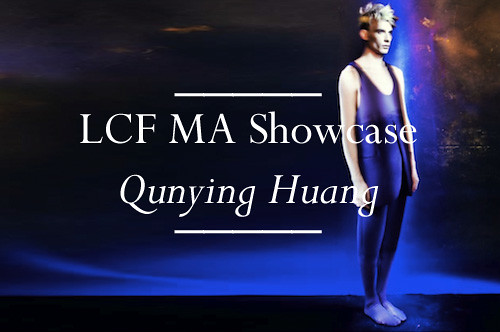
LCF MA Graduate Showcase: Qunying Huang


Despite our eyes being fixed on the goings on in New York, we just had to continue our LCF MA Graduate showcase series. Recent posts have celebrated the cream of the latest crop of MA graduates and have seen us speak with each of our favourite students to learn more about their collections and their experiences at LCF. Here, we turn our attention to the collection of Qunying Huang.

Entitled Bound & Boundless, Huang's collection is focused on exploring and expressing different personal boundaries and Chinese philoshophy. Through the stunning combination of jacquard fabrics with flat fabrics, the design talent uses a design method that refers itself to modern art and traditional tailoring to express the four different personal boundaries as well as the feeling of protection and vulnerability of masculinity. Here we talk to the design talent to hear about her experiences at LCF, learn more about the processes and techniques used within the collections and reveal her hopes for the future...
----------

SS: Firstly, congratulations on more than playing your part in a dazzling, menswear rich MA show. How did it feel seeing your finished designs on the catwalk?
Qunying Huang: Seeing our MA show at the V&A was a monumental moment for all of us. I was enjoying the moment. We have worked a long time for it, this was our time and every one was watching us.

SS: Describe the moment you realized you wanted to be a menswear designer?
Qunying Huang: This idea only came from when I was in my BA Course, I was in China at that moment. In the third year we had a menswear course, and I found that menswear is more about subtle details and tailoring, which is quite different from womenswear. And I love to make some totally different things. This is a challenge to me.

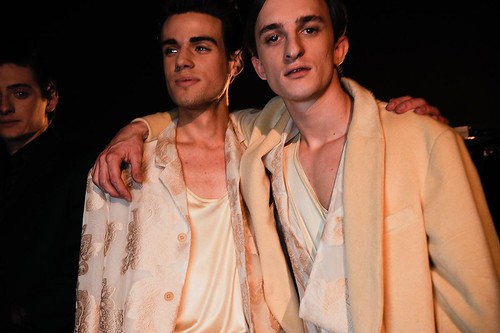
Backstage at the MA show. Photography by Morgan O'Donovan

SS: What attracted you to the LCF MA course in particular? What was the best thing about your course? And the worst?
Qunying Huang: We are free to explore anything we want to explore, and we have the opportunity to push things.

The best thing of my course is we can turn our original ideas in to real garments. It is very interesting to see our own design on models. In the process of making the collection, I have improved a lot in my project management, time management, tailoring skills and so on.

The worst thing is when we want to use some special machines, we need to travel a long way.

SS: Now on to your collection itself. Bound & Boundless experiments with fabric and tailoring techniques in a stunning way. Can you talk us through the inspiration for the collection?
Qunying Huang: I got the inspiration from the personal boundaries and Chinese philosophy “in the world, all things are born of being, being is born of non-being. Laozi”. There are four kinds of personal boundaries, they are soft, sponge, rigid, flexible personal boundaries. People will feel weak and vulnerable when they have a soft personal boundary, which has been expressed by jacquard and soft fabrics. People with rigid personal boundary would feel isolated and protected. For the Chinese philosophy, I tried to express the non-being, that space is what is needed. For example, look at a house, what we need is the space inside it. If the house does not have space inside, it offers no benefit to us at all. I focused on the combination of different fabrics and the proportion of every outfit.


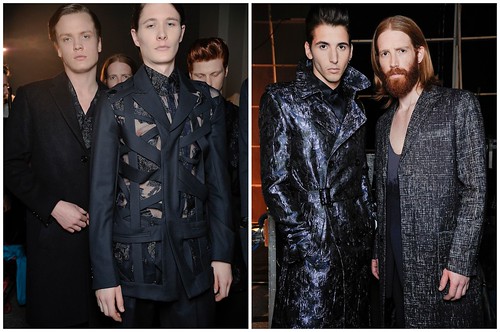
Backstage at the MA show. Photography by Morgan O'Donovan

SS: The main focus of the collection has been on the silk jacquard outfits and the Tanaka technique. Could you talk us through these techniques?
Qunying Huang: Silk jacquard fabrics are really difficult to make for menswear and I wanted to express masculinity through very soft fabrics. The jacquard jacket is not traditional tailoring, I use some organza between jacquard and silk lining to support the front body and lapel. Jersey and wool are combined by the Tanaka technique. Wool has to be much heavier than the jersey. I put wool at the bottom of the jacket, so we can see the wool a slightly drop when the model wear it, it was subtle details.

SS: How would you describe the collection in your own words?
Qunying Huang: Soft but masculine.

SS: I know this is difficult question to answer but have you got a favourite, anything that you were most proud of?
Qunying Huang: The most proud of thing is that I can always get inspiration from our life, as well as I can do what I love and I did it well. When the people told me that they like my collection, I was proud of myself.


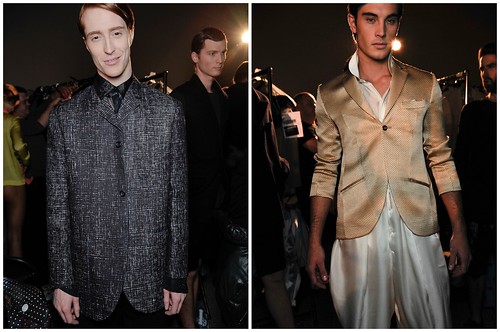
Backstage at the MA show. Photography by Morgan O'Donovan

SS: The menswear on show this year was so strong. I was amazed to see that fifteen of the twenty two graduates selected studied menswear. Aside from your own, which was your favorite of the graduate collections?
Qunying Huang: I love Mio’s collection, she used amazing fabrics and she is so good at tailoring. She worked very hard and used a very different way in V&A show to present her collection.

SS: What advice would you give a prospective menswear fashion student?
Qunying Huang: Don't be afraid to use some unusual fabrics and do whatever you like.

SS: Finally, what would you like to achieve in 2011 and beyond?
Qunying Huang: I will stay in London and continue developing beautiful menswear and womenswear to express myself. I am looking for a job at the moment, I want to get more work experience.


Backstage at the MA show. Photography by Morgan O'Donovan
----------
 
As she explored various personal boundaries, Qunying Huang has created collection a soft yet maculine collection through the use of uncommong tailoring techniques and light fabrications. I for one, am looking forward to watching her talent develop. I'll leave you with her eye catching look book. Shot by Nikolay Biryukov, the look book captures the essence of the collection perfectly...

Photography by Nikolay Biryukov, hair and makeup by Joanne Lui with Florian Pessenteiner modelling.

Thursday, February 10, 2011

LCF MA Graduate Showcase: Michelle Quick


To celebrate the cream of the incoming crop of LCF MA graduates we have been speaking to each of our favourite students to learn more about their collections and their experiences at LCF. We kicked off this year's series with prize winning Matteo Molinari before turning our attentions to the wood craft of Yan Liang. Now it is time to highlight a hugely talented footwear design graduate that left this budding shoeist breathless.


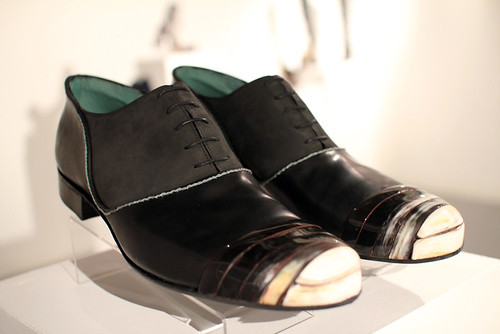
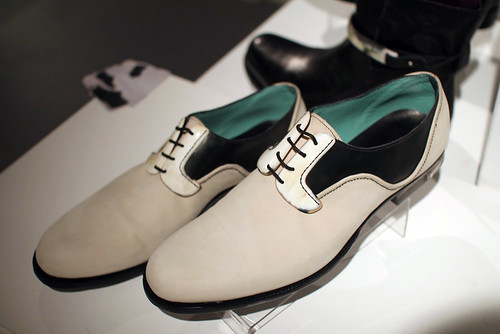
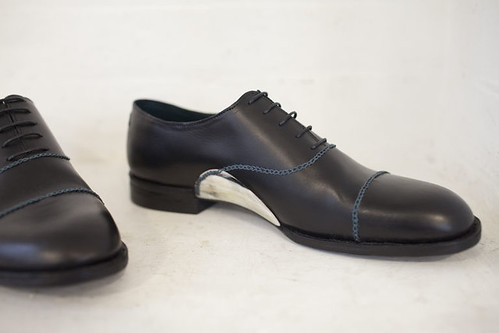
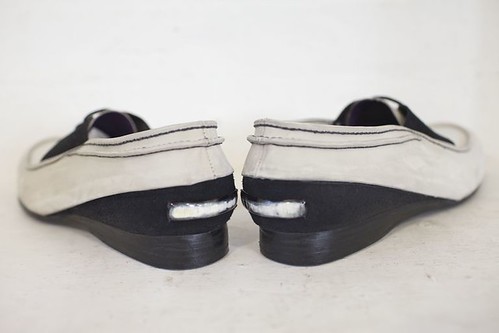
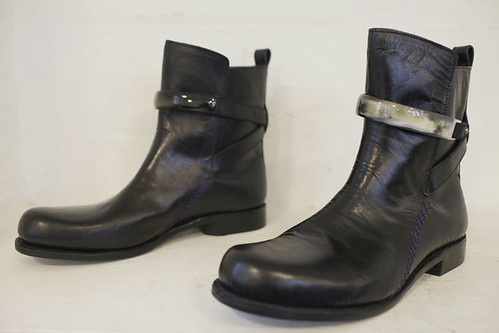
Michelle Quick's graduation collection challenges traditional gender roles within craft practice by combining inherently feminine crafts with men's bespoke footwear. I was taken by her ability at combining various shoe age old making techniques with unusual materials. Entirely made by hand, the collection showcases intricate stitching, various welting techniques and utilizes cow horn as a structural and decorative element to stunning effect. Here we talk to the design talent to hear about her experiences at LCF, learn more about the processes and techniques used within the collections and reveal her hopes for the future...

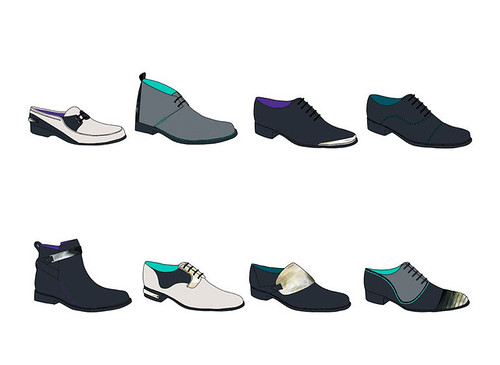
The collection in Illustator

SS: Congratulations on more than playing your part in an exciting MA show (in terms of menswear in particular). How did it feel seeing your finished designs on the catwalk?
Michelle Quick: Thank you, it was an amazing experience. Footwear is generally displayed in a static exhibit, which is great for getting to look up close and see the details but it's completely different to see them on the foot and in motion. It was important for me to showcase the collection in both ways, so I paired up with MA Menswear designer Mio Jin. We both admire each other's work and thought our collections worked well together. The show was great, it was so exciting and really the end of all the hard work that had led to it. The shoes are now on display at Victoria House.

The Dress oxford catching the eye on the display at Victoria House

SS: Describe the moment you realised that you wanted to become a footwear designer?
Michelle Quick: I was attending The School of The Art Institute of Chicago, studying textiles and general art/design. When I took one of the shoe making classes in my 2nd year, something just clicked - I felt it combined all the disciplines I enjoyed into one craft. I continued to study footwear there and combine it with my other classes, I haven't stopped since.

The Derby shoe standing proudly at Victoria House

SS: What attracted you to the LCF (Cordwainers) MA course in particular? What was the best thing about your course? And the worst?
Michelle Quick: After graduating from SAIC, I felt I still needed something before I could start my career. Resources are limited in The States for shoe making and there aren't any schools that offer an MA in Footwear. The UK is a shoemakers mecca in comparison. Cordwainers has an incredible history/alumni list but the MA Footwear and Artefact programs at LCF are very new and innovative, which is a great balance.

The best part of the course is the resources that are available to you - amazing facilities, knowledgeable staff - and that you are encouraged to push boundaries and try new things. It's really a self-taught course, the resources are there and you have to be motivated and utilise them.

I wish the course would have been longer, maybe two years instead of a year and a half because it was so intense and you really had to put any outside priorities on hold. I do think the timing for releasing our final collections is good though, just before LFW.

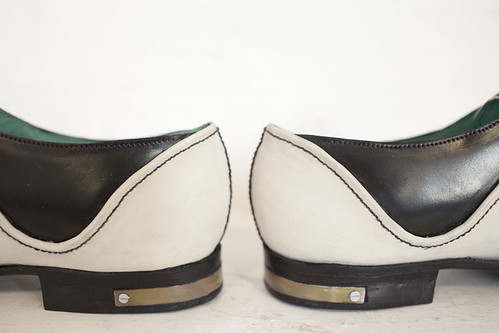
Boat Shoe. Nubuck and rough suede upper, concealed wedge and horn strip heel. Image by Tim Medley

SS: The collection challenges traditional gender roles within craft practice by combining inherently feminine crafts with men's bespoke footwear. Was this the driving inspiration behind it?
Michelle Quick: Definitely. I did a lot of knitting, weaving, and embroidery during my BA and when I came to London and started investigating the bespoke shoe shops here, I realised that a lot of crafts are still very gender specific. I wrote my thesis on the origins of gender roles in different crafts and how they can still hold true today. Obviously there are men who knit and women who make shoes or do wood-working, but there is still usually a dominant gender. For my final collection, I wanted to combine various crafts and make objects that feel somewhat neutral.

Stitch Oxford. Image by Tim Medley

SS: The collection features intricate stitching, various welting techniques and utilises cow horn as a structural and decorative element but how would you describe the collection in your own words?
Michelle Quick: For me, the collection is about balancing masculine and feminine characteristics - I used contrasting textures and style lines to establish that dialogue. I also wanted to creating something that felt modern and fresh even though I was using traditional craft techniques. Even though the designs are rooted in my concept and body of research, it was still about making shoes that people would desire and want to wear.

Boat Shoe with horn strip on the heel. Image by Tim Medley

SS: Could you talk us through a few of the main processes involved?
Michelle Quick: Hand-stitching onto leather was a new thing for me, it's very different than fabric because you can't make a mistake the same way you can with fabric because the hole from the needle is permanent. I had to measure and mark out all the stitch marks and really take my time with it. It changed the way I had to assemble the shoes.

Most of the shoes are hand welted. After the upper is lasted, you hand stitch a strip of leather (the welt) to the upper and through the insole - this stitching is hidden. You then stick the sole on and stitch through the welt and the sole - this is the stitching that is exposed around the shoe. It's an incredibly laborious process, you have to twist and wax your own thread and taper the ends so they can be attached seamlessly to flexible needles. You are stitching through very thick soling leather and have to make a hole first with an awl - my wrists were in a lot of pain for a while.

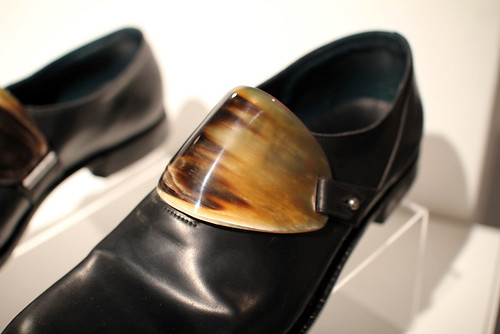
Horn quarter piece on the Monk Shoe

SS: Cow horn is one of the most prominent decorative and structural components in your collection. What attracted you to this material?
Michelle Quick: I've always been fascinated with horn objects, I love seeing old horn combs and caviar spoons in museums. The colours are so varied and you can polish it to such a high shine. It's a material that is present in all bespoke shoe houses (shoe horns, brushes, etc) but is rarely used on the shoes themselves. I was interested in how it could be used to adorn shoes in a new way.

It was difficult to figure out how to work the horn. There are very few resources online or in books and almost no companies still working with it. My initial research was quite frustrating. I was very fortunate to come across Abbeyhorn, the last remaining horn-workers in the UK (see below). After getting guidance from them, I was able to come back to my studio and experiment and figure out the process that worked for me. It does smell pretty bad (like burnt hair) when you are sanding and heating it, so my course-mates were never very happy with that.

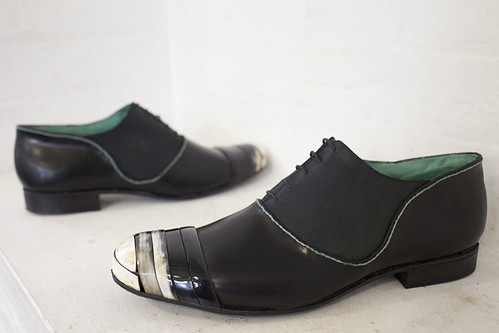
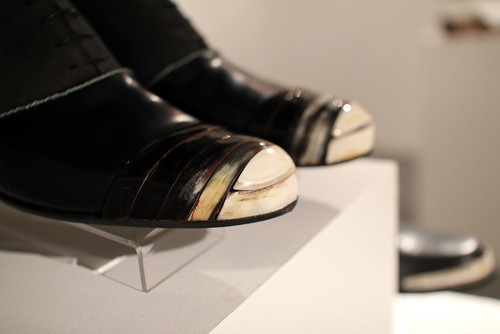
The cowhorn toe cap on the Dress Oxford. Image by Tim Medley

SS: How difficult was it to work with?
Michelle Quick: It's an unpredictable material, each horn is unique in it's colouring, it also has areas that are more dense so it doesn't always heat evenly and you end up with kinks when you mould it. I was obviously making pairs so if one piece didn't work out I generally had to redo both to make them match. It took me a while to get comfortable and figure out the best way to do things.

A closer look at the horn toe cap. Strips of horn have been sanded together.

SS: All of your products are, of course, handmade and feature intricate detailing. How long did each pair take to make?
Michelle Quick: All of the shoes had different areas that took more time than others, some have a lot of hand-stitching while others only a hint, some have a traditional welted sole and others a cemented sole, etc. I calculated that they all took between 30-60 hours each, depending on the level of difficulty. That is from patterning to finished product, but doesn't account for the few months when I was experimenting and prototyping.

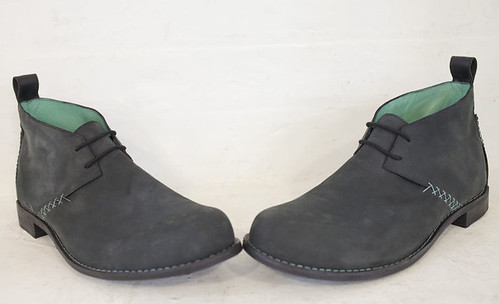
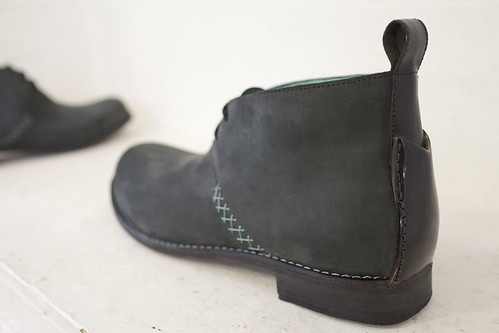
Desert boot in Nubuck and rough cut suede upper. Image by Tim Medley.

SS: In Abbeyhorn and Metropolitan Leather, you worked alongside some great craftsman, how did you find them and how receptive were they to your designs and what did they make of the collection?
Michelle Quick: The people I worked with were so amazing. I've found that if you are genuinely interested in someone's craft, they are more than willing to help you out or give you advice.

The quality of the veg tan leather at Metropolitan is incredible and the colourist Stuart can just look at the swatch you've brought in and mix up dye that's a perfect match instantly. They custom dyed all of my linings to match the threads and I also got soling leather from them.

Abbeyhorn was a great resource for me. They make mostly traditional horn objects and don't deviate from their catalogue too much, so I think they were happy to help me try and use the horn in a new way. I didn't understand the limitations of the material at first, so my ideas were a bit far fetched but the owner Paul helped show me what was possible and how it could be achieved.

I was also advised on my welting and other shoe making aspects by Carreducker. Welting is something you need to learn directly from a person (like most crafts), I had tried to teach myself from books but it was all the little nuances that James and Deborah taught me that allowed me to make shoes to the quality that I have.
I've had nothing but good feedback and support from everyone I've worked with, I feel lucky to have established relations with these companies.

Jodhpur boot with horn and leather strap. Image by Tim Medley

SS: I know this is a difficult question but is there anything that you're most proud of?
Michelle Quick: I'd have to say I'm most proud of how much my skills have developed throughout this course. I feel that my design skills are much stronger and that the quality and speed of my shoe making has greatly improved. It's hard to believe that the course was only a year and a half because it feels like so much has changed.

SS: What advice would you give a prospective footwear design student?
Michelle Quick: I think that learning the making process can only make you stronger as a designer, the more you understand about the product, the more you can experiment and push the actual design.

A closer look at the handstitched upper with raw edge and Herringbone stitch on the Desert Boot. Image by Tim Medley

SS: Finally, what would you like to achieve in 2011 and beyond?
Michelle Quick: My dream is to find a job where I can have a balance between designing and making. The craft side is so important to me, but I don't necessarily need to be making shoes in a workshop all day. Equally, I wouldn't like just churning out designs that I didn't have a tactile hand in somehow. It's all up in the air right now, I want to stay in London for a while and I would like to continue with men's footwear. I think it will be important to work for established companies before trying to pursue anything on my own. Hopefully only good things are to come.

The stacked leather heel on the Derby. Image by Tim Medley.

If the above leaves you desperate for more, I happily point you in the direction of Michelle Quick's informative tumblr. There can be little doubt that this was a labour of love and the results surely make the hard graft worthwhile. The graduate ultimately showcases a real and exciting passion for shoe making. Each design is close to bursting point with meaningful details but nothing feels superfluous or unnecessary. There is a real balance between them. The diverse details combine to create shoes to truly covet. The real surprising element for me is that each shoe exudes a well crafted quality that is most rare to find in a graduate collection. I for one am excited to see what Quick does next but one thing is for sure, my feet will hopefully be treated to a pair one day soon.

Popular Posts